Vibration Level Drop Test Station Isolation System
Vibration Level Drop Test Station Isolation System
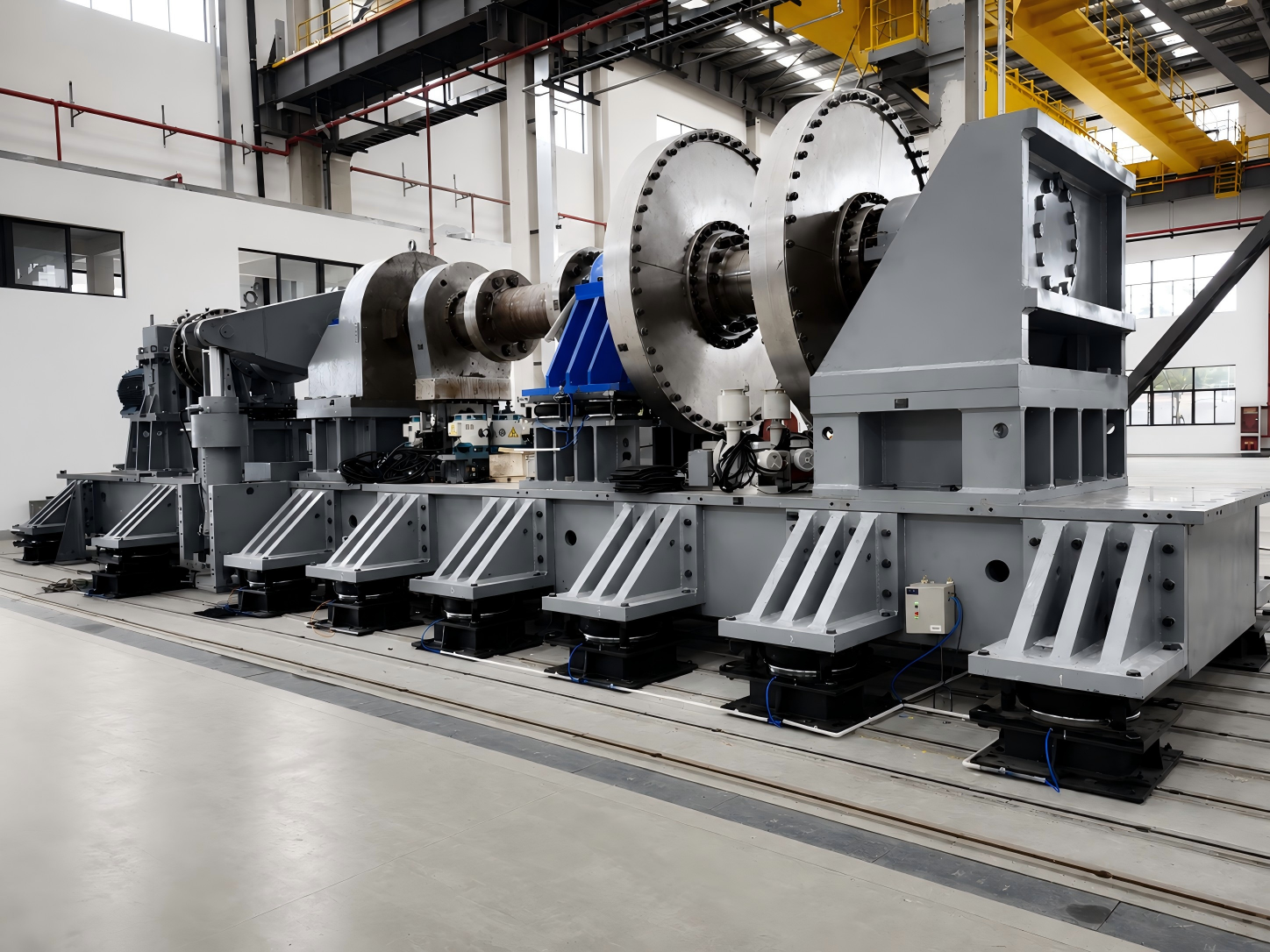
This project is applied to a vibration level drop test station. To meet the requirements for vibration isolation, vibration level drop control, and overall structural stability, AISTECH carried out simulation and calculation analysis for the vibration-isolated flexible shaft, as well as vibration level drop analysis between the driving and driven ends of the tested unit. The system was designed to achieve a vibration level drop of at least 30 dB.
In addition, modal analysis was performed for the entire test station to verify the dynamic characteristics and operational stability of the structure. Through systematic calculation and analysis, the project verified that the adopted isolation devices comply with the technical requirements and that the vibration isolation performance of each test station section satisfies the design targets. A detailed calculation report was also provided to support subsequent design, installation, and commissioning.
System Configuration
The vibration level drop test station requires isolation devices to reduce vibration coupling between different equipment sections. The system mainly includes:
One set of isolation devices for the test platform
One set of isolation devices for the driving platform
One set of isolation devices for auxiliary shaft support 1
One set of isolation devices for auxiliary shaft support 2
All air isolation devices are equipped with leveling systems, providing stable support and precise leveling for each platform and support section. This helps maintain the system posture during testing and ensures controlled vibration transmission.
Core Advantages
1. Vibration Level Drop Analysis
Simulation analysis was conducted for the vibration level drop between the driving and driven ends of the tested unit, verifying whether the system meets the requirement of at least 30 dB vibration reduction.
2. Flexible Shaft Isolation Analysis
The vibration isolation performance of the flexible shaft was calculated and evaluated to assess its influence on the vibration transmission path and ensure that the overall system meets the design targets.
3. Overall Modal Analysis
Modal analysis was carried out on the complete test station to identify natural frequencies and dynamic characteristics, reduce resonance risks, and improve operational stability.
4. Multi-Platform Isolation Configuration
The system provides independent isolation designs for the test platform, driving platform, and auxiliary shaft support sections, effectively reducing vibration coupling between different equipment units.
5. Precision Leveling System
All air isolation devices are equipped with leveling systems to precisely control platform height and horizontal position, improving test station stability and testing reliability.
Typical Applications
Vibration level drop test stations
Driving platform isolation systems
Test platform isolation foundations
Auxiliary shaft support isolation
Vibration coupling control projects
Precision test station isolation
High-stability laboratory isolation platforms
AISTECH provides simulation analysis, isolation device selection, leveling system configuration, and complete vibration isolation solutions based on different test station structures, isolation targets, vibration level drop requirements, and operating conditions. These solutions deliver stable and reliable vibration control support for high-precision test stations.